
Search Michigan Traffic Ticket Records
Michigan traffic ticket records are held by district courts in all 83 counties and by the Secretary of State. You can search case information online through the MiCOURT portal, order a copy of your official driving record through ExpressSOS, or visit the district court where a citation was filed. This guide covers each option for finding Michigan traffic ticket records, explains what each type of record contains, and walks through the steps to get what you need whether you are looking for a court case, a driving history, or a crash report.
Michigan Traffic Records at a Glance
How to Search Michigan Traffic Ticket Records Online
Michigan has two separate systems for finding traffic records online. One is MiCOURT, the statewide court case search portal. The other is the Secretary of State's ExpressSOS system, which provides official driving records. They serve different purposes. Knowing which one to use before you start saves time.
MiCOURT is the place to go for court case data. You can search by party name, case number, attorney bar number, or business entity name. Search results show the case type, filing date, court location, and current case status. Each case has a register of actions showing every event that happened in the case from filing to final disposition. Fines, costs, and payment history often appear in the case detail view. To start a search, go to micourt.courts.michigan.gov/case-search. You'll need to accept the terms of service and complete a quick CAPTCHA verification before any results load. The system covers civil infractions like speeding tickets as well as criminal traffic cases like OWI and reckless driving.
MiCOURT has some limits. Nonpublic cases do not appear. This includes certain drug diversion cases handled under MCL 333.7411, HYTA cases for young offenders, and neglect or abuse matters. Personal information such as Social Security numbers, dates of birth, and full addresses is redacted in results. The system updates overnight, so very recent filings from the past day or two may not appear yet. For certified records or actual document copies, you still need to contact the court directly.
The Michigan Courts official site at courts.michigan.gov is a solid starting point for finding contact information for every district court in the state. You can locate court addresses, phone numbers, local websites, and downloadable forms from one place. Each district court in Michigan is a separate entity, so resources and search tools can vary by county.
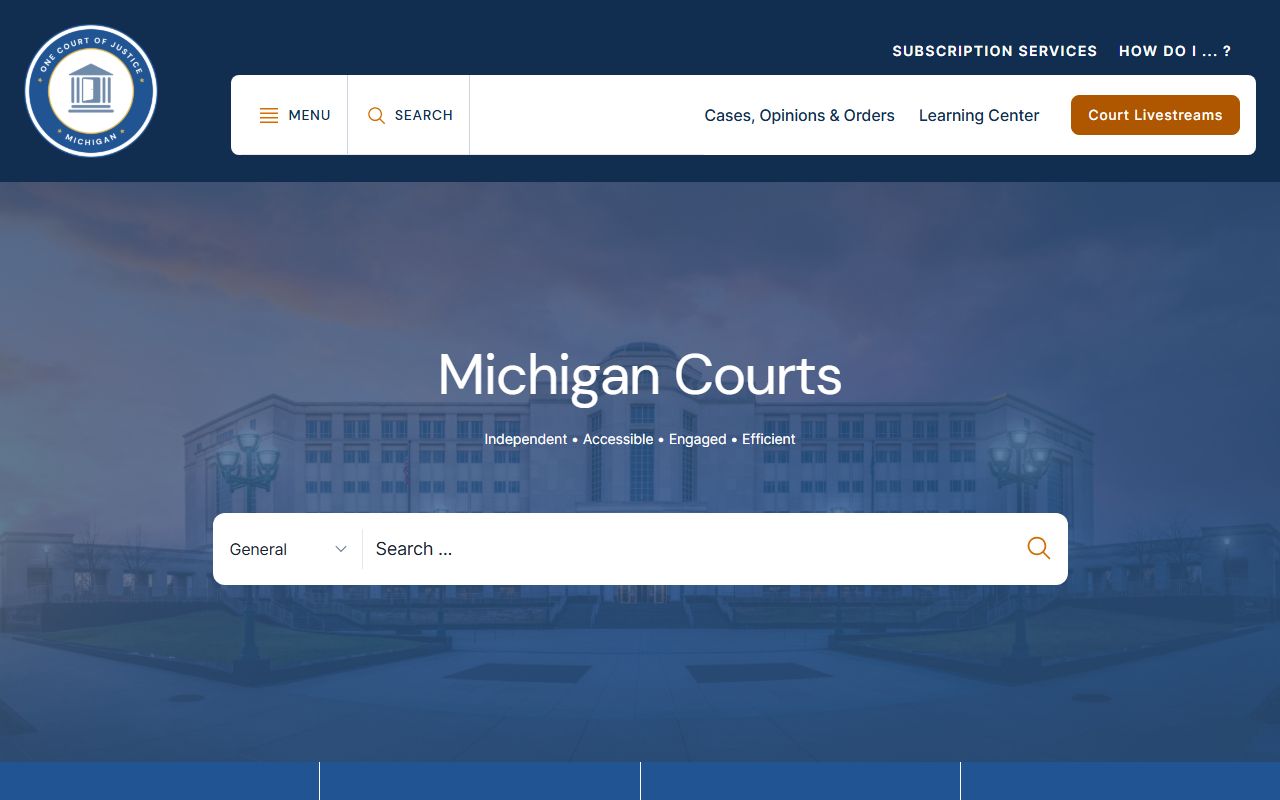
The Michigan Courts homepage at courts.michigan.gov lists every trial court in the state. It is the official resource for court contact information, online services, and court programs related to traffic cases across all 83 counties.
Note: MiCOURT shows case information but not document images. To get copies of actual filings, judgments, or citations, contact the district court where the case was filed.
Michigan Secretary of State Traffic Ticket Driving Records
The Michigan Secretary of State maintains an official driving record for every licensed driver in the state. This document is known as the OP-120. It shows your full conviction history, current points, any license sanctions, accident entries if applicable, and your current license status. Insurance companies, courts, attorneys, and others with a valid purpose can request these records under MCL 257.208c, the Driver Privacy Protection Act.
The fastest way to get a Michigan driving record is through ExpressSOS at mvic.sos.state.mi.us. The cost is $12.00 for a certified copy or $11.00 for a non-certified one. You need to create an account and provide your Michigan license number, date of birth, and the last four digits of your Social Security number. Once payment is submitted, you can view and print the record right away. Only credit and debit cards are accepted for online orders.
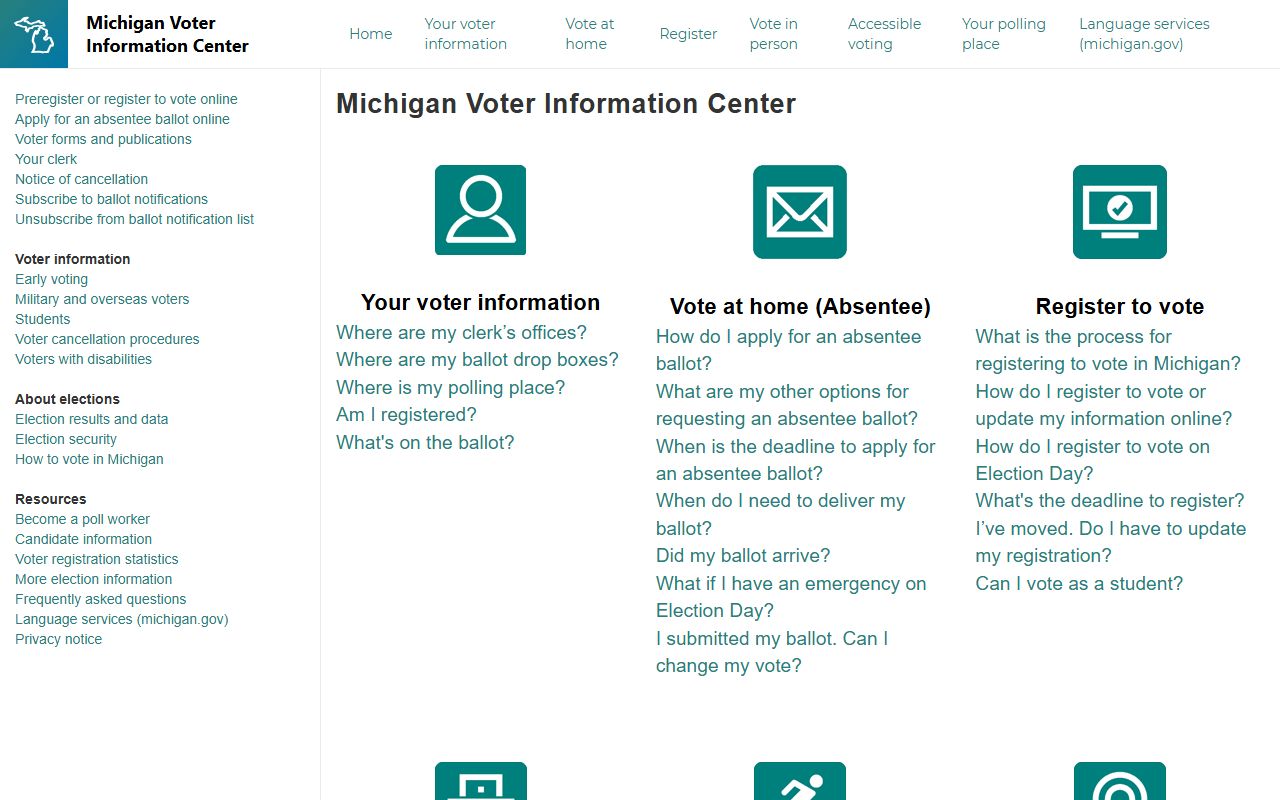
The ExpressSOS portal at mvic.sos.state.mi.us handles online driving record requests for Michigan. A non-certified copy costs $11.00 and a certified copy costs $12.00. This same portal is used by anyone with a permissible purpose under the Driver Privacy Protection Act.
Mail requests go to the Record Sales Unit at the Michigan Department of State, 7064 Crowner Drive, Lansing, MI 48918-1502. Call (517) 322-1624 for assistance or fax to (517) 322-1181. For a third-party request, use form BDVR-154. If you have a pre-established account and are requesting your own record, use form BDVR-153. Checks and money orders should be made payable to "State of Michigan." Processing takes 3 to 5 business days plus mail time. The fee still applies even if no record exists for the person requested.
In-person requests are handled at SOS branch offices statewide or at the Record Sales Section. Hours are Monday through Friday, 8:30 AM to 4:00 PM. Accepted payment methods include cash, check, money order, and credit or debit cards. Same-day processing is available for in-person standard requests.
Under MCL 257.328, a Michigan driving record must include the driver's full name and address, date of birth, license number, license class and status, all violations and convictions, accident entries, points accumulated, and any license sanctions with reinstatement requirements. Certified copies also include an official certification statement and seal.
Michigan Traffic Ticket Point System
Michigan assigns points to your driver's license for moving violations. The system is governed by MCL 257.320. Points stay on your record for two years from the conviction date, not the violation date. They are a tracking tool, not an additional fine.
The state uses four point levels. Two-point violations include open alcohol containers in a vehicle and most other minor moving violations not listed in a higher category. Three-point violations include careless driving under MCL 257.626b, speeding 11 to 15 mph over the posted limit, disobeying a traffic signal or stop sign, improper passing, failure to stop at a railroad crossing, failure to stop for a school bus, improper turns, and disobeying a school crossing guard. Four-point violations include speeding 16 or more mph over the limit, drag racing, impaired driving, failure to yield to an emergency vehicle, failure to show a valid license, and disobeying a police officer's directions. Six-point violations are the most serious and include operating while intoxicated (OWI/DUI), reckless driving, hit and run, fleeing or eluding police, refusal of a chemical test, and manslaughter involving a vehicle.
Points build toward consequences. Six points within two years brings a warning letter from the Secretary of State. Nine points within two years triggers a warning and possible mandatory driver reexamination if you have had two or more tickets within the past 12 months. Twelve or more points within two years means mandatory reexamination. Eighteen or more points within two years can result in license suspension. New drivers on probationary licenses face stricter rules. Two tickets within the first 12 months requires reexamination, and any single six-point offense triggers it automatically.
Under MCL 257.320a, only the highest-point offense per incident counts. If you receive two violations from a single traffic stop, only the one with more points is assessed. Points calculate from the conviction date, not the date of the original traffic stop.
Note: Points are tracked separately from fines and court costs. Paying a civil infraction fine means you admitted responsibility, which also puts the conviction and its points on your driving record.
Types of Michigan Traffic Ticket Records
Michigan traffic records fall into three main categories. Each is maintained by a different agency. Knowing which type you need before searching will save time and frustration.
The first is the official driving record, the OP-120. The Secretary of State maintains this document. It covers all traffic convictions, current points, license status, sanctions history, and accident entries where applicable. You get this through the SOS, not through the courts. Under MCL 257.328, it must include a full history of violations and convictions from the past two years along with license sanctions information. If you need proof of your traffic conviction history or want to know what points are on your license right now, this is the record to request.
The second type is the district court case record. This is what the court clerk maintains after a ticket is assigned a case number and proceeds through the court system. It includes the original citation, case number, all hearing dates, the final disposition, any fines and court costs assessed, and payment history. Most traffic violations in Michigan are civil infractions under MCL 257.907. The maximum base fine for a civil infraction is $100 for regular vehicles or $250 for commercial motor vehicles, plus a $40 Justice System Assessment per violation. You can look up court case records through MiCOURT or in person at the district court.
The third type is the traffic crash report, also called the UD-10. Under MCL 257.617, police officers must prepare this report within 24 hours for any crash involving injury, death, or property damage over $1,000. Reports must be forwarded to the Michigan State Police within five days. You can search for crash reports through the MSP at a cost of $10.00 per report. A crash report includes vehicle and driver information, contributing circumstances, weather and road conditions, a diagram of the crash scene, officer narrative, and any citation information from the crash.
The Michigan State Police ICHAT system at michigan.gov/ichat handles criminal history background checks for $10.00 per search. It covers arrests, convictions, warrants, and incarceration records, including misdemeanor and felony traffic offenses such as OWI and reckless driving. Standard civil infractions like speeding tickets and red light violations do not appear on ICHAT results.
How to Get Michigan Traffic Records and Copies
The process for getting a copy depends on what type of record you need. Driving records come from the SOS. Court case records come from the district court. Crash reports come from the Michigan State Police. Each has its own process and fees.
For court records, contact the district court where the citation was filed. Michigan has district courts in every county, and some counties have multiple district courts serving different cities or townships. Most courts handle records requests in person during business hours, typically 8:00 AM to 4:30 PM Monday through Friday. Standard copies cost $1.00 per page at most Michigan courts. Certified copies range from $5.00 to $10.00 per document depending on the court. Payment methods vary, but cash, check, and money orders are widely accepted. Some courts also take credit cards.
Mail requests are accepted at most district courts. You'll generally need to include the defendant's name, date of birth, and case number if available. Include a self-addressed stamped envelope for return mail. Processing times for mail requests often run between three and ten business days. Some courts, such as the 35th District Court serving Canton Township and Plymouth, use an email request system at Recordchecks@35thdistrictcourt.org and will contact you with the fee before processing.
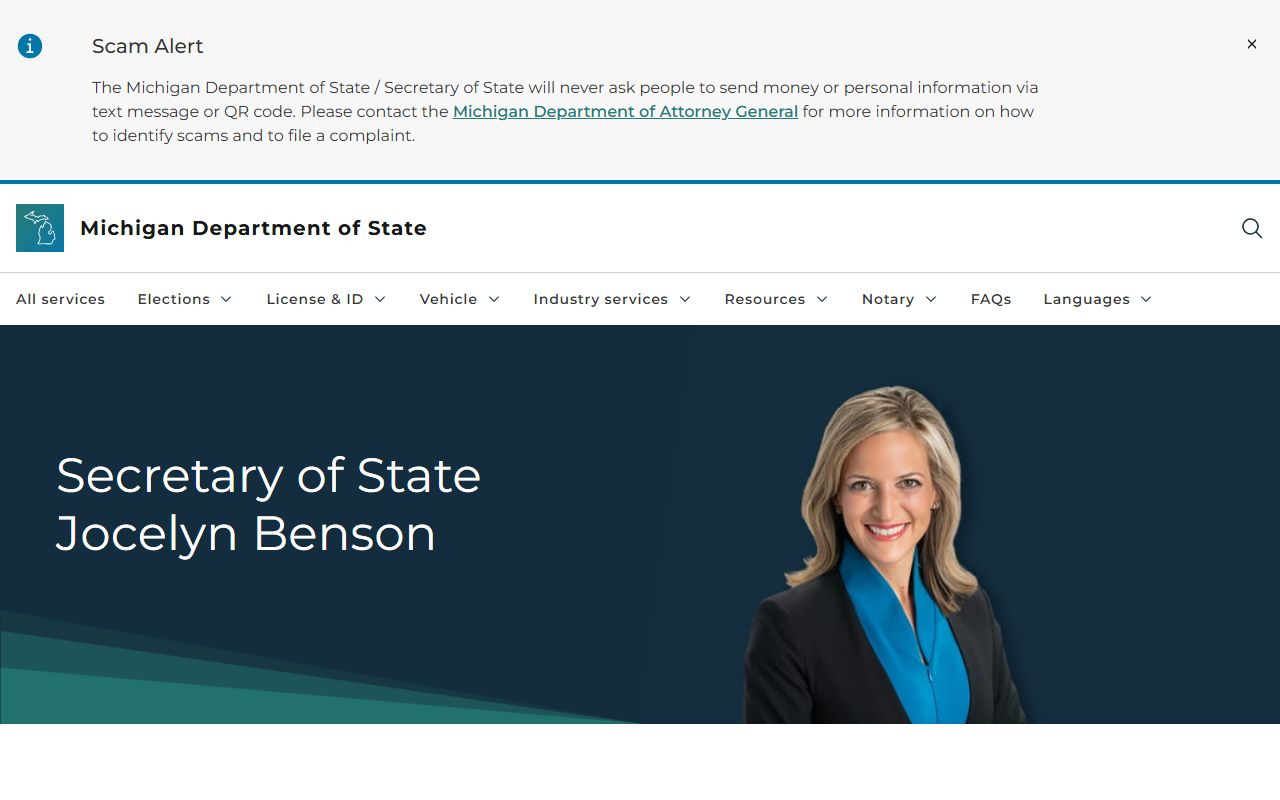
The Michigan Secretary of State homepage at michigan.gov/sos is the starting point for driving record requests, license status checks, and vehicle registration lookups. The SOS system is completely separate from the court system. Use it specifically for driving history and license information, not for court case records.
Michigan Traffic Courts and Civil Infractions
Most traffic violations in Michigan are civil infractions, not crimes. Under MCL 257.907, a civil infraction is a non-criminal violation. You do not face jail for a civil infraction, though fines and points on your license can follow. You can resolve a civil infraction by admitting responsibility and paying the fine, by admitting with an explanation to a magistrate, or by denying responsibility and requesting a formal hearing.
When you receive a traffic ticket in Michigan, the citation shows the violation code, the fine amount for civil infractions, and the court where the case is assigned. If you pay without requesting a hearing, that payment is treated as an admission of responsibility. The conviction and its associated points then transfer to your Secretary of State driving record. Felony and misdemeanor traffic cases go through district or circuit court depending on the charge. First-offense OWI, reckless driving, and most other misdemeanor traffic offenses are handled in district court. Third-offense OWI and cases involving death or serious injury may be charged at the circuit court level under felony statutes. Felony convictions appear on MSP ICHAT criminal history checks.
The 36th District Court in Detroit is the busiest district court in Michigan and handles the highest volume of traffic cases in the state. For online payment of traffic fines in Wayne County, the CivPay system at courts.waynecounty.com/civpay allows payments by credit or debit card. The 24-hour phone payment line at 1-855-798-1547 also accepts payments by card with a pay location code from your ticket.
Browse Michigan Traffic Ticket Records by County
Each of Michigan's 83 counties has at least one district court that handles local traffic cases. Select a county below to find court contact details, local search tools, and resources for traffic records in that area.
Michigan Traffic Ticket Records by City
Traffic tickets in Michigan are filed in the district court serving the city where the violation happened. Select a city below to find the court that handles local cases and learn how to look up traffic records for that area.